
Do you ever sit down on Sunday feeling motivated and organized, create a plan for the week ahead, and then find that the week unfolds a little differently than you expected?
Life changes. Priorities shift. Energy levels fluctuate. Unexpected things pop up.
That’s why I prefer planning methods that leave a little room to adapt as the week unfolds.
If traditional weekly planning feels overwhelming or restrictive, a more flexible approach can help you stay focused on what matters without feeling like you’ve failed every time your week takes an unexpected turn.
That’s exactly why I love this simple Sunday Planning practice.
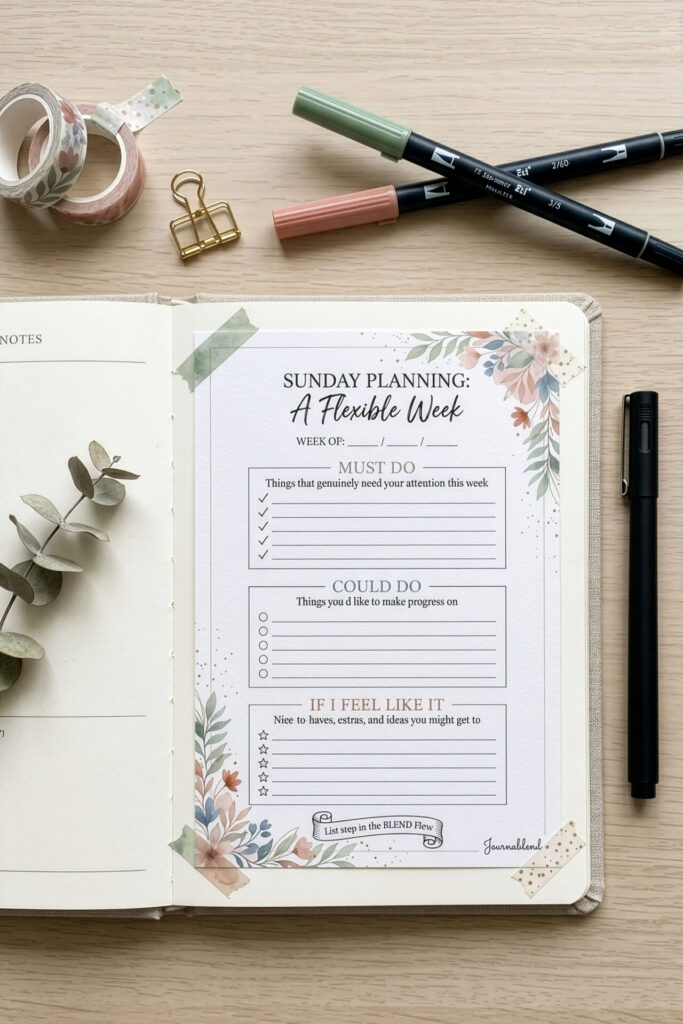
Many weekly planning systems encourage us to assign every task to a specific day and time.
While that works beautifully for some people, it can create a few common problems:
When your planner becomes another source of pressure, it’s hard to stay motivated to use it.
Instead of scheduling everything, try creating three simple lists.
These are the things that genuinely need your attention this week.
Think essentials, deadlines, appointments, commitments, and important responsibilities.
Ask yourself:
What absolutely needs to happen this week?
Keep this list realistic. If everything is a priority, nothing is.
These are the things you’d like to make progress on.
They’re important, but not urgent.
Projects, goals, creative work, household tasks, learning, and personal growth often fit here.
Ask yourself:
What would I feel good about making progress on this week?
This is where you build a little flexibility into your week.
Add the nice-to-haves, extras, ideas, and optional tasks that would be lovely to get to if time and energy allow.
This list removes the pressure of trying to do everything while still capturing those ideas before they disappear.
Ask yourself:
What would be a bonus this week?
This approach creates built-in flexibility.
Instead of attaching tasks to specific days, you’re creating layers of priority.
When life gets busy, you focus on your Must Do list.
When you have a productive day, you can work on your Could Do items.
When you find yourself with extra time or energy, you can dip into your If I Feel Like It list.
Nothing gets lost.
Nothing needs to be constantly rescheduled.
And perhaps most importantly, you can still feel successful even when your week doesn’t go exactly as planned.
When filling out your page, try journaling on this question:
This is one of my favorite prompts because it helps shift your focus away from perfection and toward what really matters.
Sometimes success looks like crossing twenty things off a list.
Sometimes success looks like getting one important thing done while navigating a busy, messy week.
Defining success before the week begins helps you stay grounded when plans inevitably change.
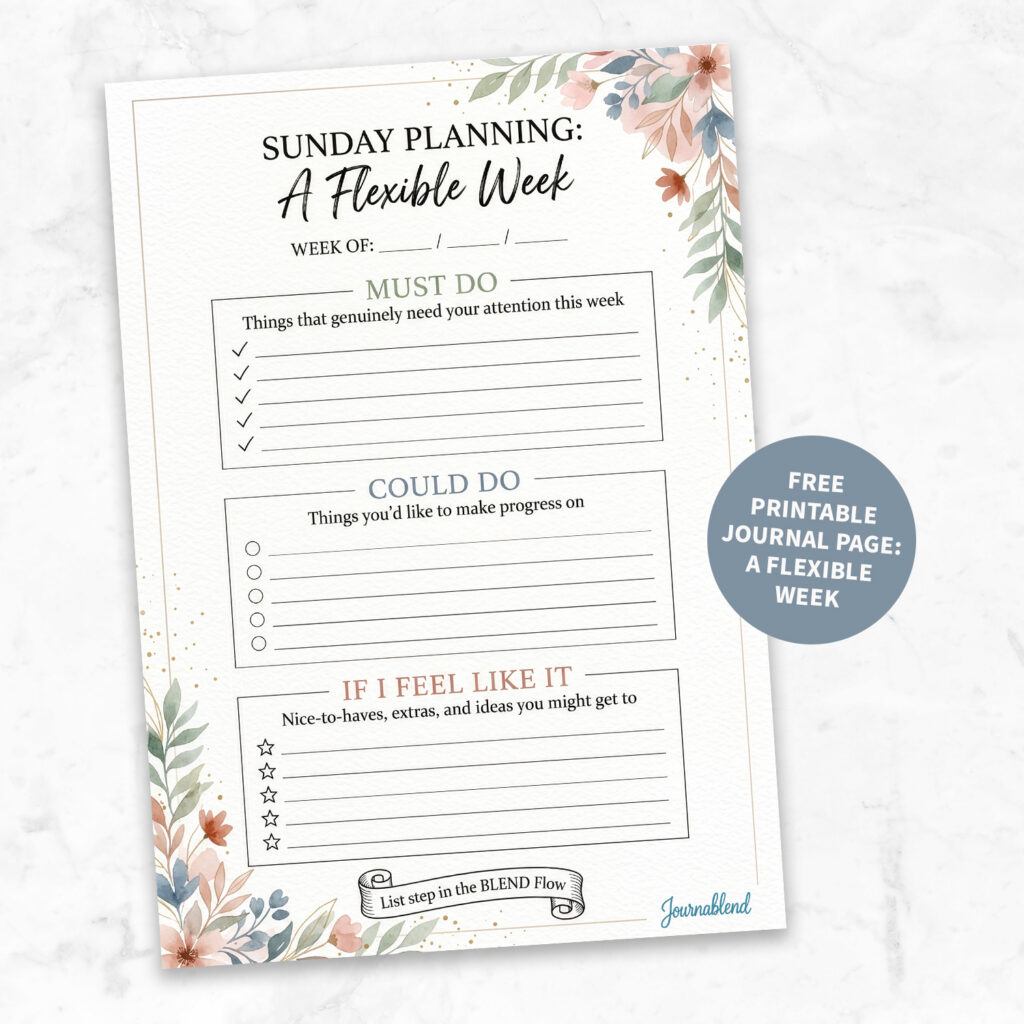
To make this practice even easier, I’ve created a free printable journal page called A Flexible Week.
The page includes dedicated sections for:
It’s simple, uncluttered, and designed to help you quickly identify what matters most without creating another complicated planning system to maintain.
You can download the printable:
Print it out, tuck it into your planner, add it to a binder, or use it as inspiration in your journal.
If you’re familiar with my BLEND Flow, this planning method fits naturally into the List step.
The goal isn’t to create a perfect schedule.
It’s to create simple, flexible lists that help you focus on what matters while leaving room for the reality of everyday life.
Sometimes a list is all you need.
I’ve recently started sharing a simple planning rhythm over on Patreon:
They’re short, practical posts designed to support real-life planning rather than perfect planning.
If you enjoy simple journaling, mindful planning, creative organization, and finding ways to make your planner work for you instead of against you, I’d love for you to join us.
Because planning doesn’t have to mean filling every minute of your week.
Sometimes the most helpful plan is simply knowing what matters most, and giving yourself permission to be flexible with the rest.
Happy journaling x