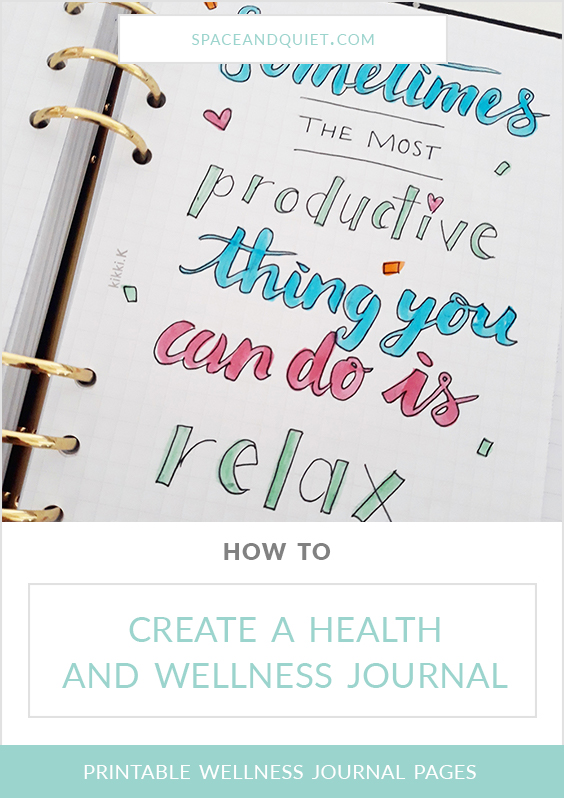
If you’ve been wanting to start a wellness journal but aren’t quite sure what to include, this will give you a simple place to begin.
A wellness journal doesn’t need to be complicated or perfectly structured. It can be a gentle space where you check in with yourself, notice patterns, and support your wellbeing in a way that feels natural.
In this post, you’ll find simple ideas and sections you can use to create a wellness journal that works for you.
If you’d like to keep things really simple, you might begin with just a few pages:
That’s more than enough to begin, and you can always add to it over time.
This isn’t something you need to keep up with perfectly.
Your wellness journal can be a space you come back to gently – something that supports you, rather than something that adds pressure to your day.
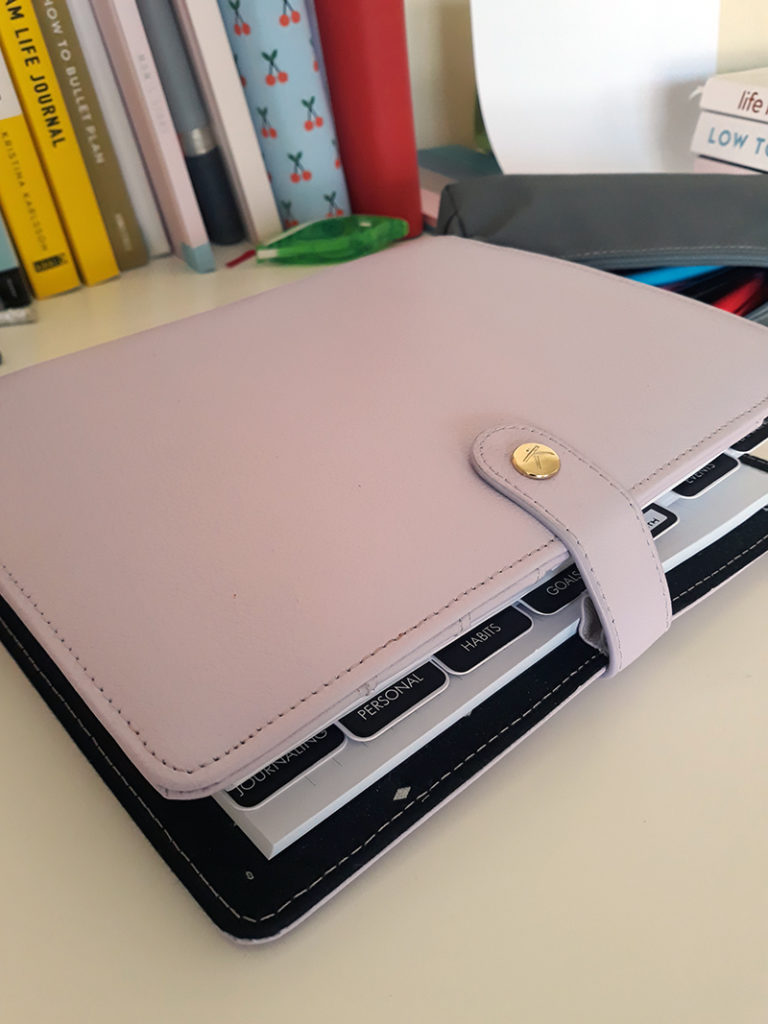
To set up my health and wellness journal, I used an empty ring-bound planner I’d had for years, along with a mix of diary inserts, lined pages, notebooks, printables, and tabs.
Of course, you can use almost any type of planner, binder, or notebook to create a custom wellness journal. The important thing is simply choosing something that works well for you and feels easy to come back to regularly.
I liked having a flexible setup that I could customize over time by adding different sections, notes, trackers, and journaling pages as needed.
Your wellness journal can be completely personal and flexible, so there’s no right or wrong way to set it up. You might choose to focus on physical wellbeing, mental health, self-care, habits, routines, or simply creating a space to check in with yourself more regularly.
Some people prefer a simple setup with just a few key sections, while others enjoy adding lots of trackers, lists, reflections, and planning pages over time.
A wellness journal might include things like:
The best wellness journal is one that feels supportive, useful, and easy to return to in your everyday life.
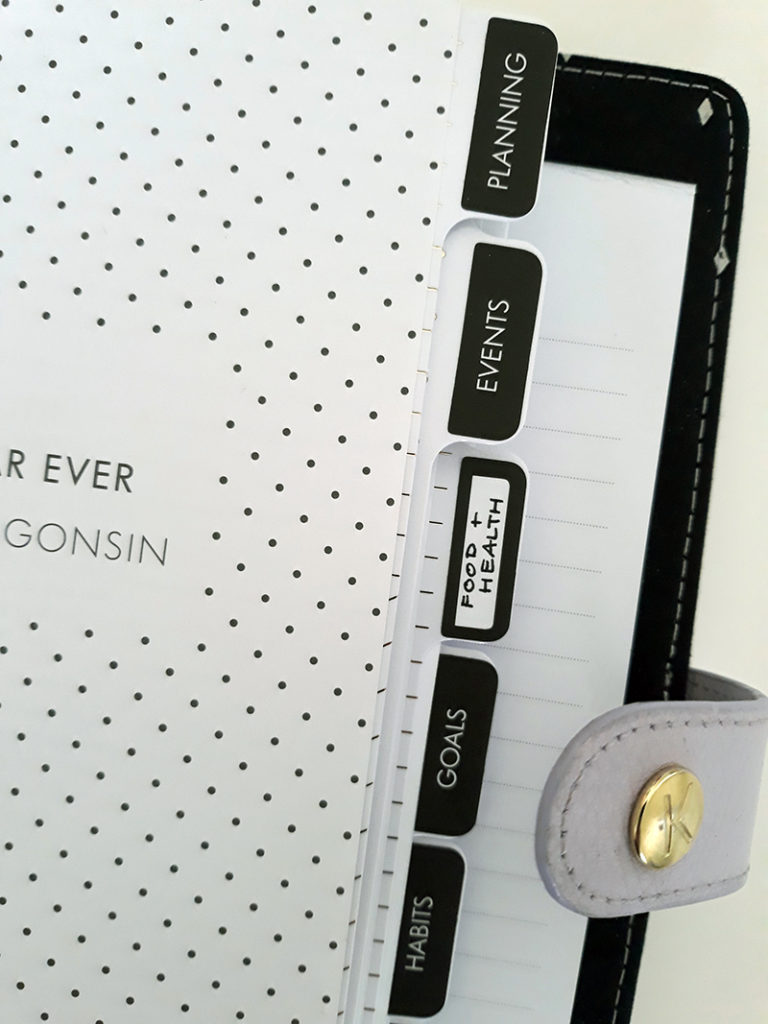
Once I had a general idea of what I wanted to include in my wellness journal, I started grouping those ideas into simple sections.
If you use bullet journaling, you can think of these sections a little like collections – different spaces within your journal for different areas of wellbeing and daily life.
I began by making a rough list of the things I wanted to focus on, including habits, moods, food, gratitude, self-care, movement, and daily reflections.
From there, I organised everything into a few broad sections so the journal would feel useful and easy to navigate without becoming overly complicated.
The sections I chose were:
This is how I used each section:
The first Tab in my Health and Wellness journal is Planning. Within the planning section, I keep a monthly view calendar.
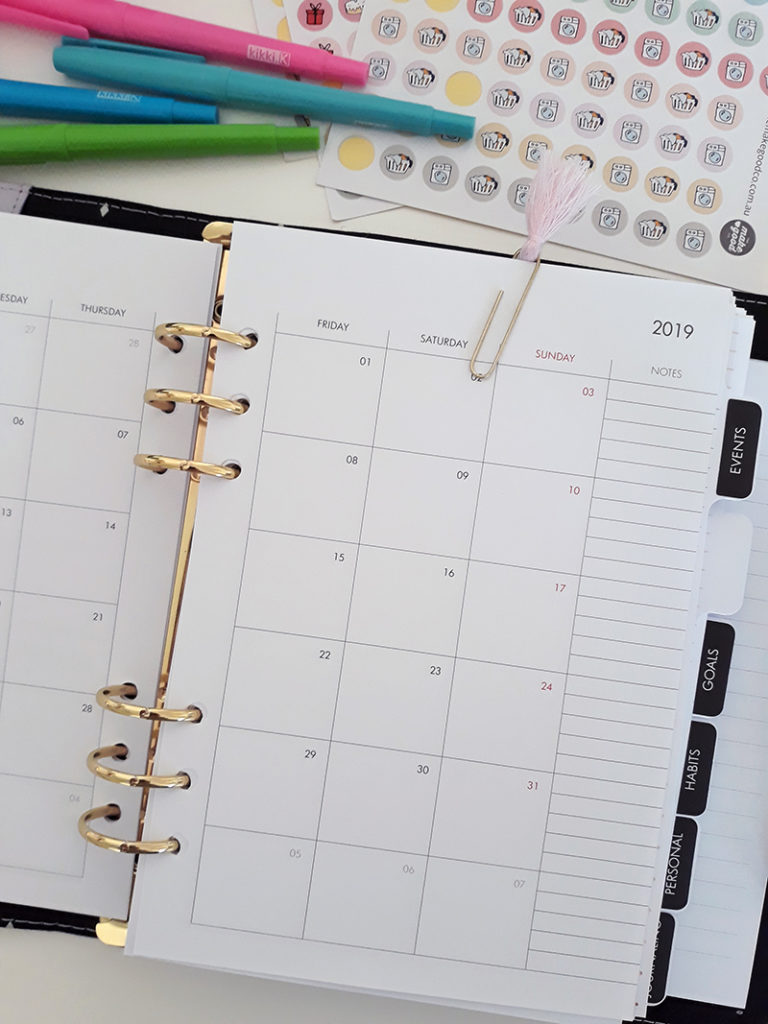
This is where I plan upcoming health-related events or appointments or capture them after they have happened. It’s also a good place to keep track of medication, recurring symptoms such as a headache, mood fluctuations, or to mark the beginning of my menstrual cycle. The monthly view makes it easy to see everything in one place, recognize patterns, and make sure nothing important is forgotten.
The second tab in my Health and Wellness journal is Events. This is essentially a Diary, with a weekly spread for each week of the year.
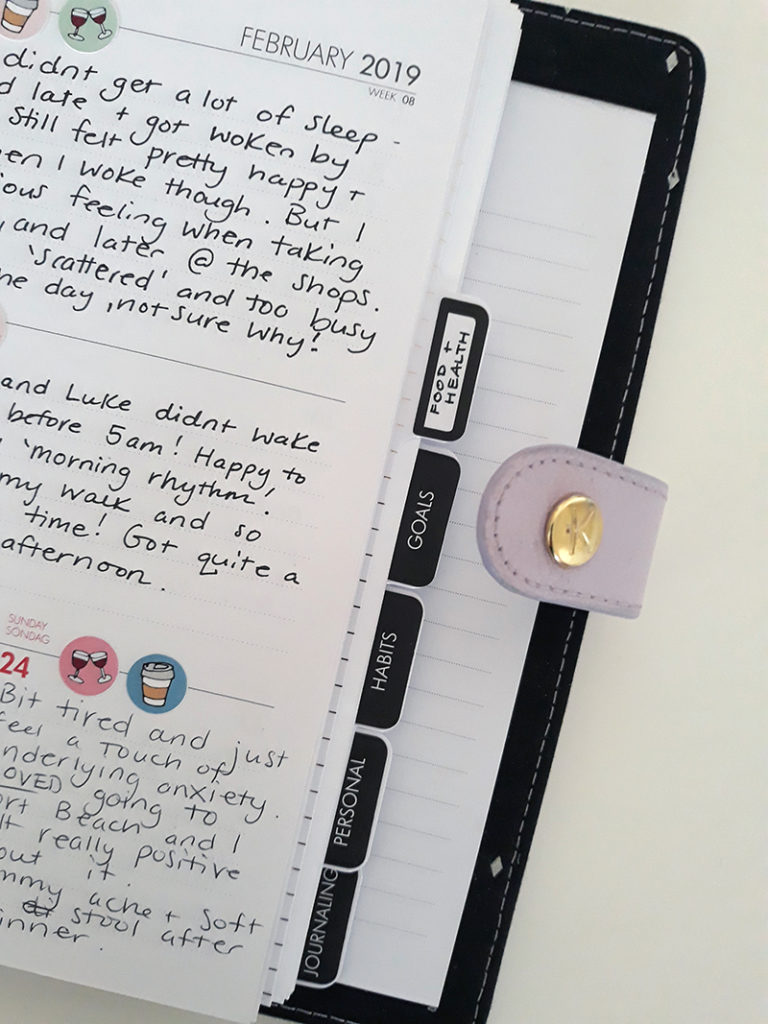
The weekly spreads are used for brief notetaking of the events of the day and how they impact on my health and wellbeing.
The third tab in my Wellness Journal is Food and Health. This is where I use the printable Food and Health Journal pages.
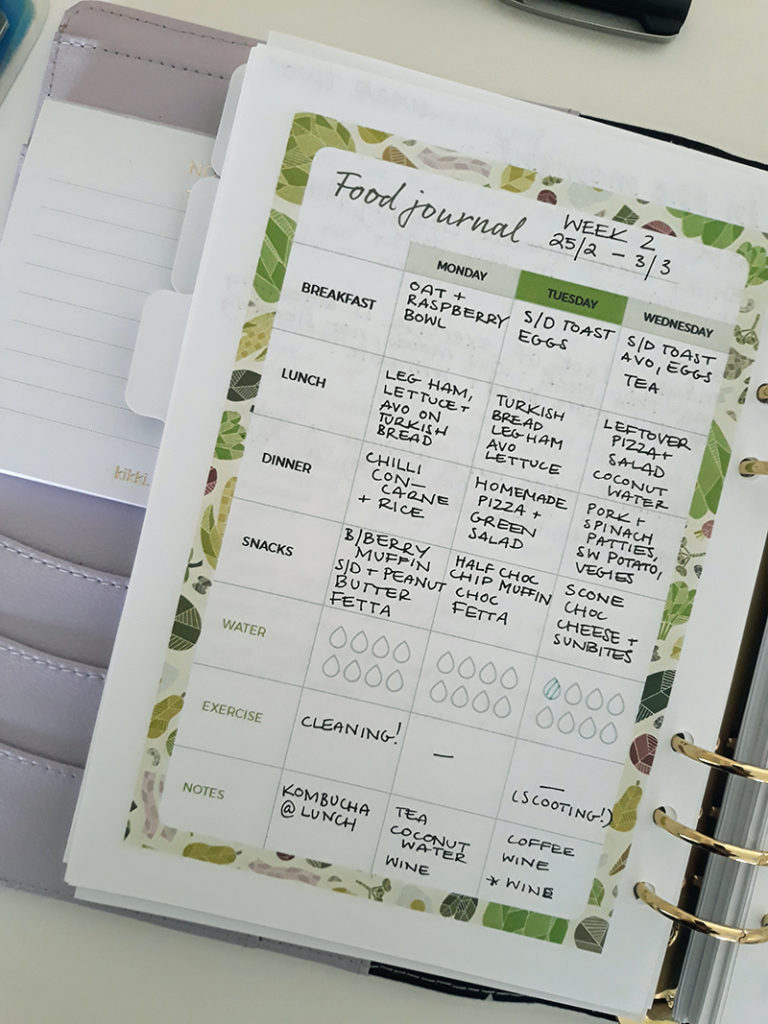
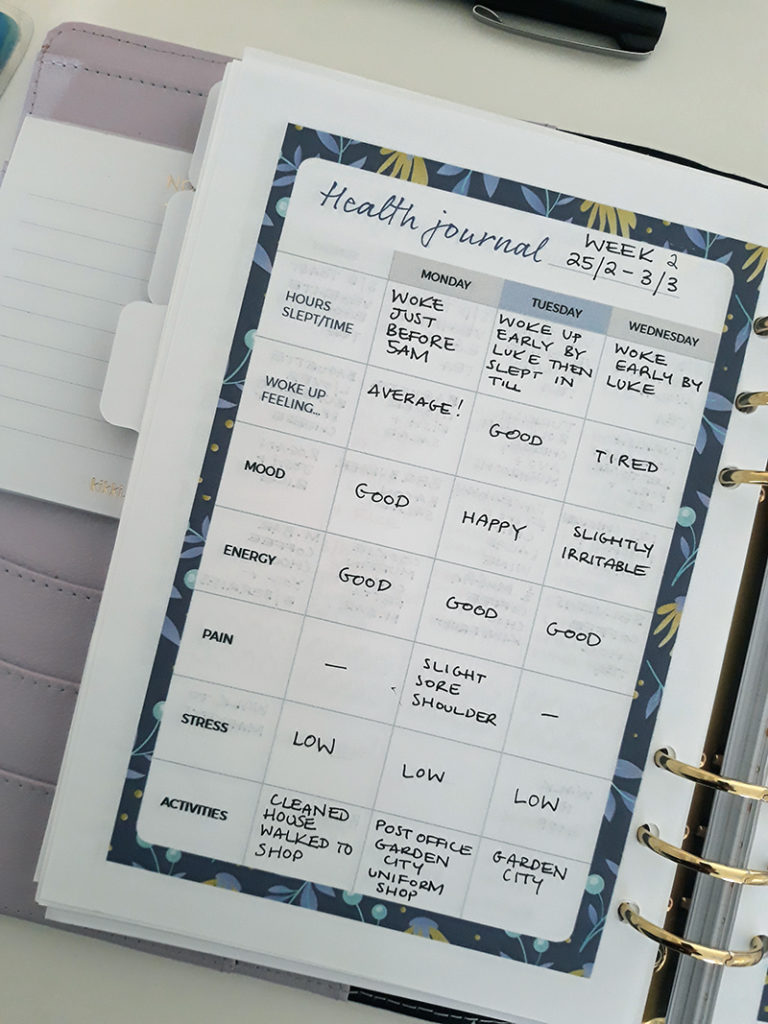
Both the Food Journal and Health Journal (which can be purchased as a set here) provide enough space to record the details of my week. Here I can log the meals that I eat, my sleep, daily exercise, moods, stress levels and more.
This is a great way to recognize any patterns forming between my sleep, moods, diet etc.
If you’re trying to improve habits in any of these areas, for example, eat a healthier diet, eliminate particular foods, or exercise three times a week, the food and health log will help you stay on track, and measure results.
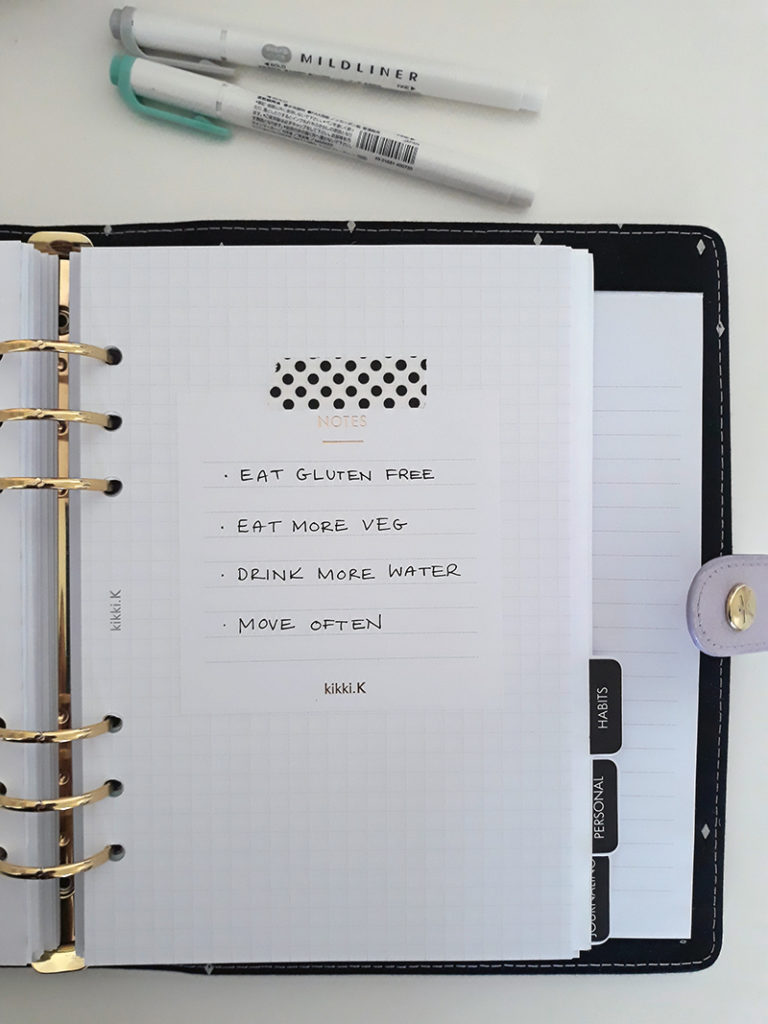
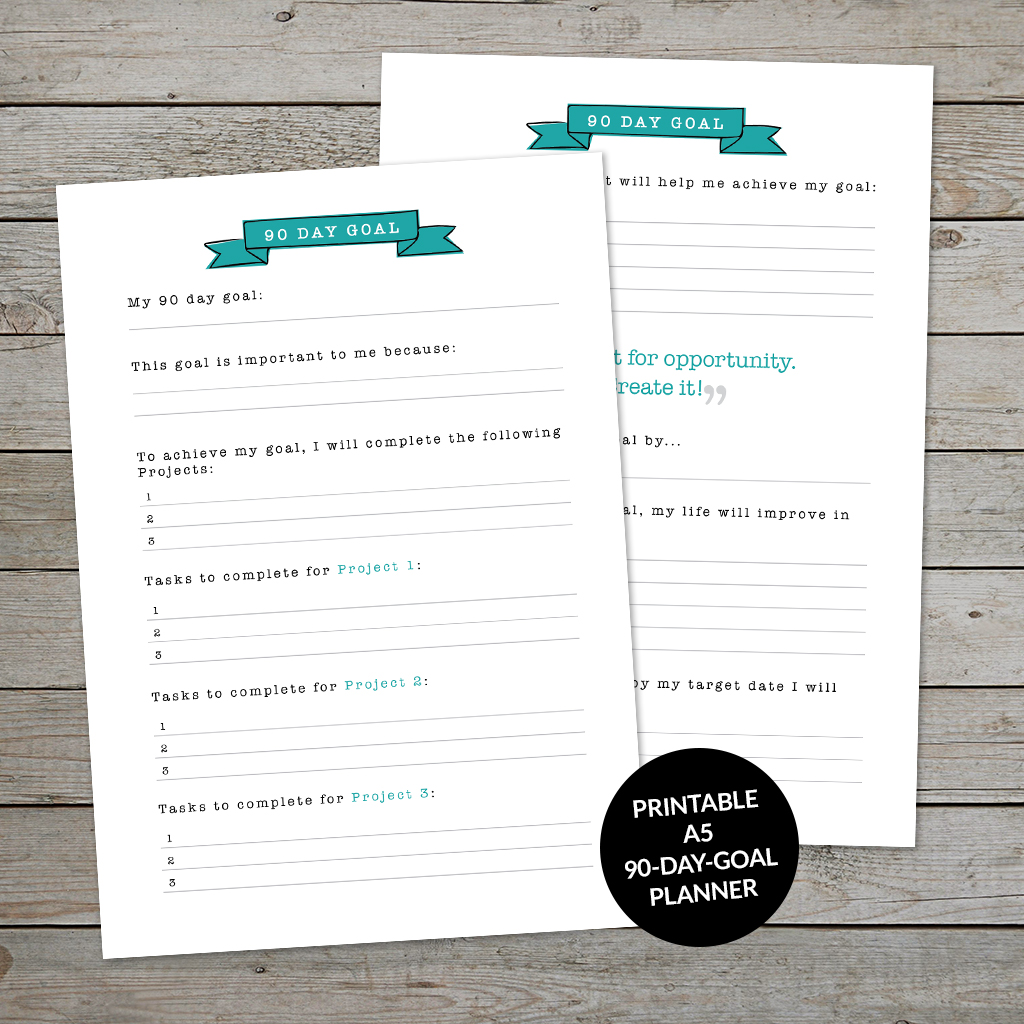
The fourth tab in my Wellness Journal is Goals. I have written down some general goals on a sticky note, plus I use the 90-day goal planner printable to achieve more specific goals.
The printable 90-Day Goal planner allows me to set one big goal to achieve in a 90 day period. This big goal gets broken down into three main projects that need to be completed in order to achieve my goal.
Finally, each project is broken down into several tasks that I can schedule into my planner. Working on these smaller tasks reduces overwhelm and I can focus on achieving my goal one step at a time.
The fourth tab in my wellness journal is Habits. Each month I print out a Monthly Habit Tracker page (download one for free in the Planner Lovers Resource Library) to insert into my journal. It’s a simple design and I can quickly fill in the month, days of the week and the habits I’m going to track.
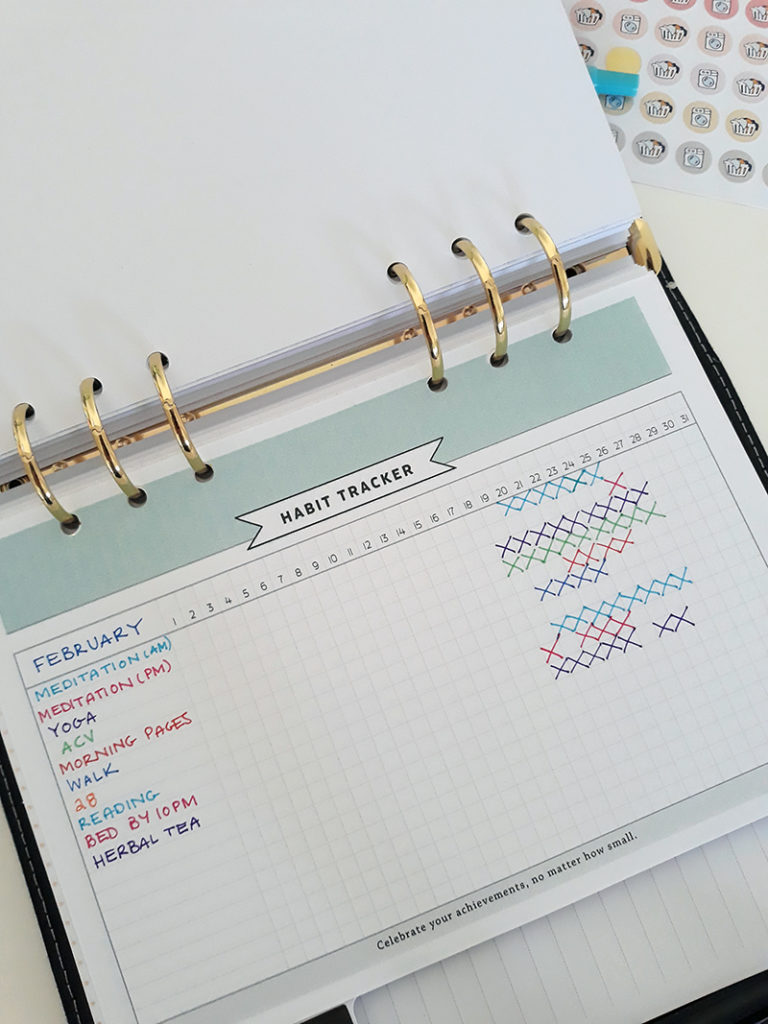
You don’t have to wait for a new month to get started. As you can see in the above image, I started this tracker towards the end of February! Set up your tracker whenever you are ready.
In this particular habit tracker, I track habits that affect my health and wellbeing in a positive way. At the end of the day, I quickly run through the list of habits and place an ‘X’ in the boxes of the habits that were completed. Using colour coding helps me to see at a glance which healthy habits I’m successfully establishing, and which ones still need some work!
The fifth tab in my Wellness Journal is Personal. In this section, I write my daily gratitude list and use brush markers to create hand-lettered versions of my favourite quotes. It’s also a good space for notetaking when reading an inspiring book or listening to a podcast.
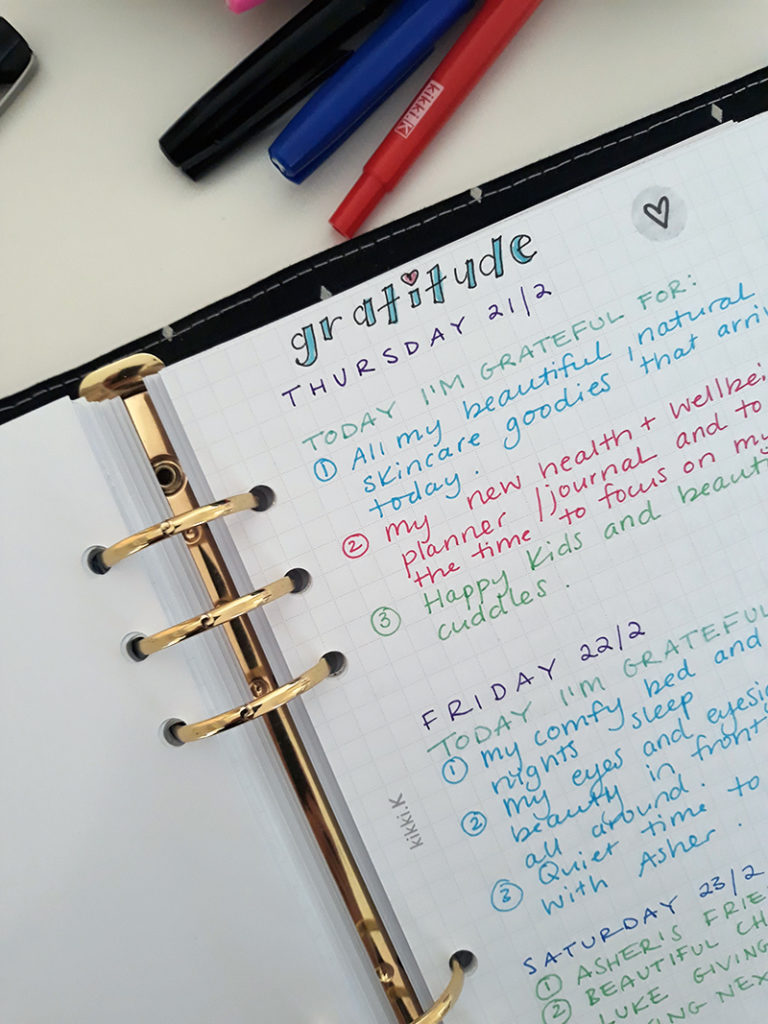
Learn more about the benefits of gratitude journaling, in this post.
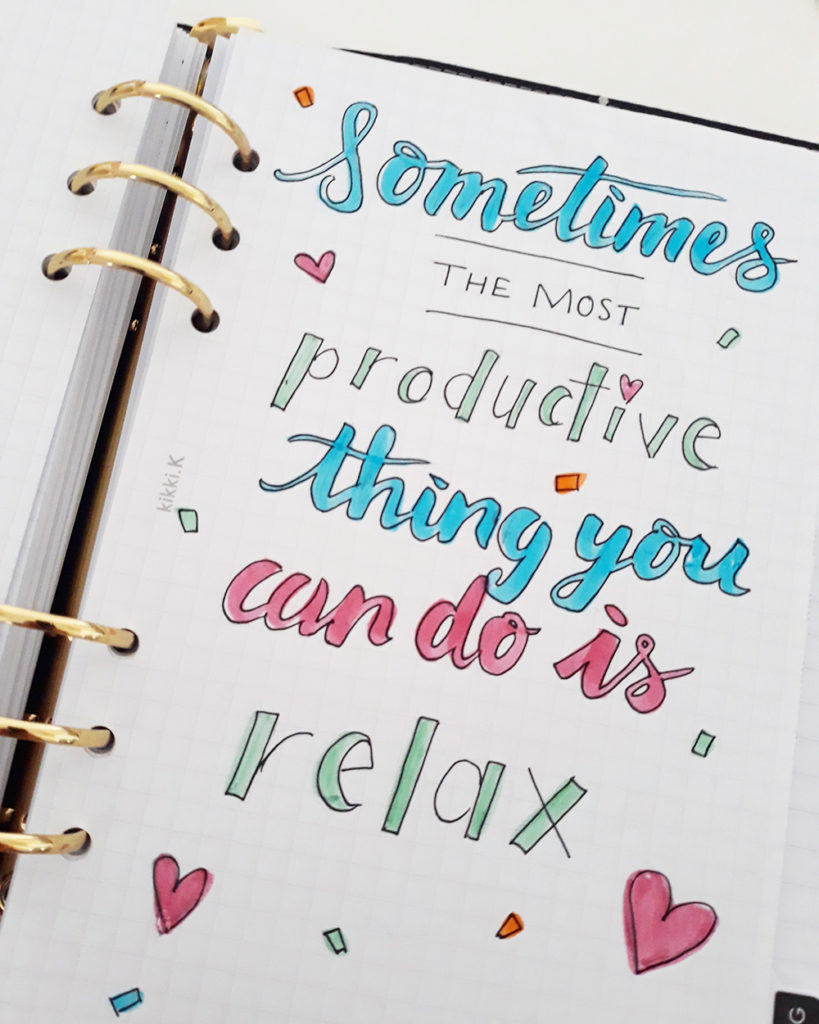
I’ve filled the Personal section with square grid paper from kikki.K. This allows for plenty of flexibility, whether I’m writing notes or getting creative with hand-lettering.
You can download printable grid, lined, and dotted pages for free in my Planner Lovers Resource Library.
The final tab in my health journal is Journaling. This section is where I express how I’m feeling using longer form journaling. I can write about my health, moods and energy levels and expand on my daily notes from the Events section.
Journaling is filled with inserts of lined paper from kikki.K.
While journaling itself is a wonderful therapeutic tool that can help you learn more about yourself and your wellbeing, reflecting on your journaling can make it even more powerful.
At the end of every day, week or month, look back over the entries in each section of your Health and Wellness Journal. Celebrate your achievements and positive habits you’ve established, no matter how small they seem.
Look for patterns between diet, quality of sleep, stress, exercise, the events of your day and more. How are they affecting your health and wellbeing? For example, were you more tired during the week you missed your exercise sessions? Or did you
Remember, health and wellness looks different for everyone. It’s important to avoid comparison, especially when using social media. Instead, focus on what is meaningful and valuable to you, and what makes YOU feel good!
When you reflect on your health and wellness journaling, can you see areas you would like to improve on? Use your Journaling section to explore these and establish more healthy habits.